Would you like to have an e-learning animation created that makes complex information easy to understand? With a compelling animation, you can teach employees, students, or users something new in a clear and consistent way. Think of onboarding animations, safety training, software tutorials, work instructions, or microlearning animations. Animation Agency custom 2D and 3D animations tailored to your learning objectives, brand identity, and target audience, including voice-overs, subtitles, and delivery for mobile and LMS.


A good e-learning animation does more than just present information. You use visuals, pacing, voice-overs, and structure to make the material easier to understand and remember. Animation is particularly effective for processes, abstract topics, and mandatory instructions, because it breaks down complex material into clear steps and relatable situations.
This is appealing to many organizations because a single animation can be scaled to reach large groups. You can use the same training for onboarding, internal training, compliance, or product knowledge, without the explanation varying from trainer to trainer. This ensures greater consistency, less confusion, and a more efficient learning process.
Een e learning animatie laten maken is daarom vooral interessant als je:
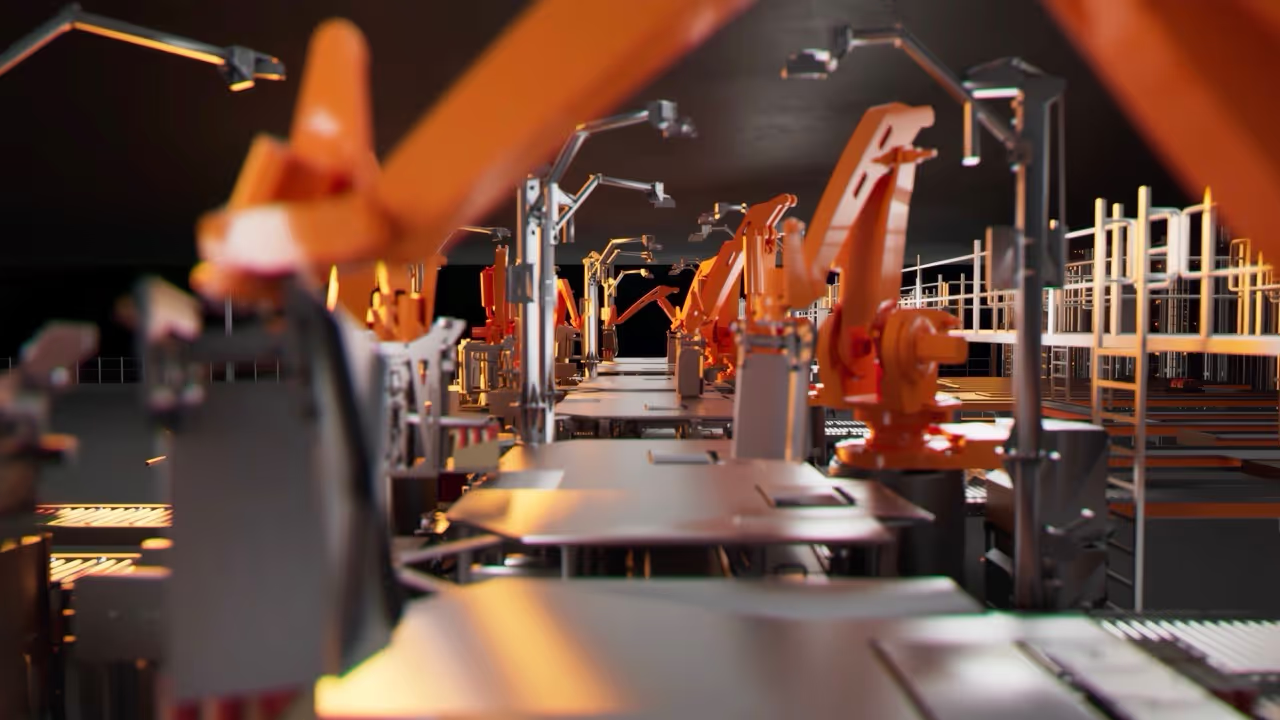
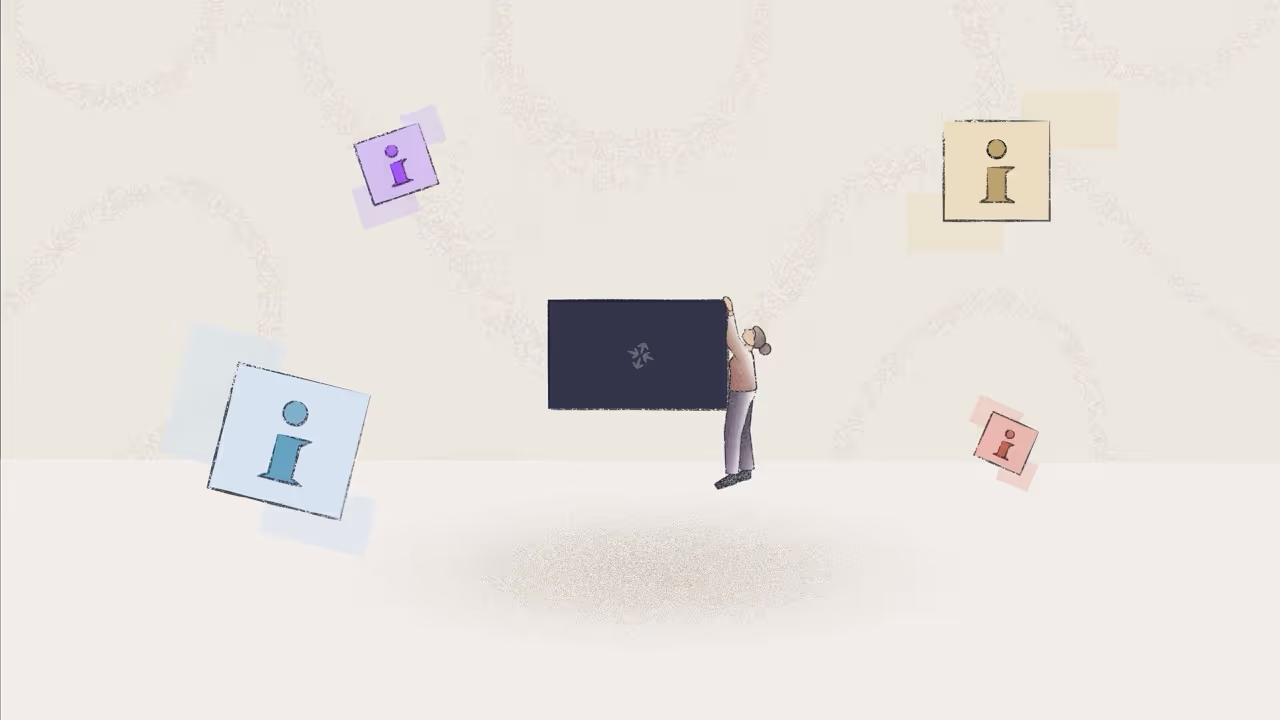
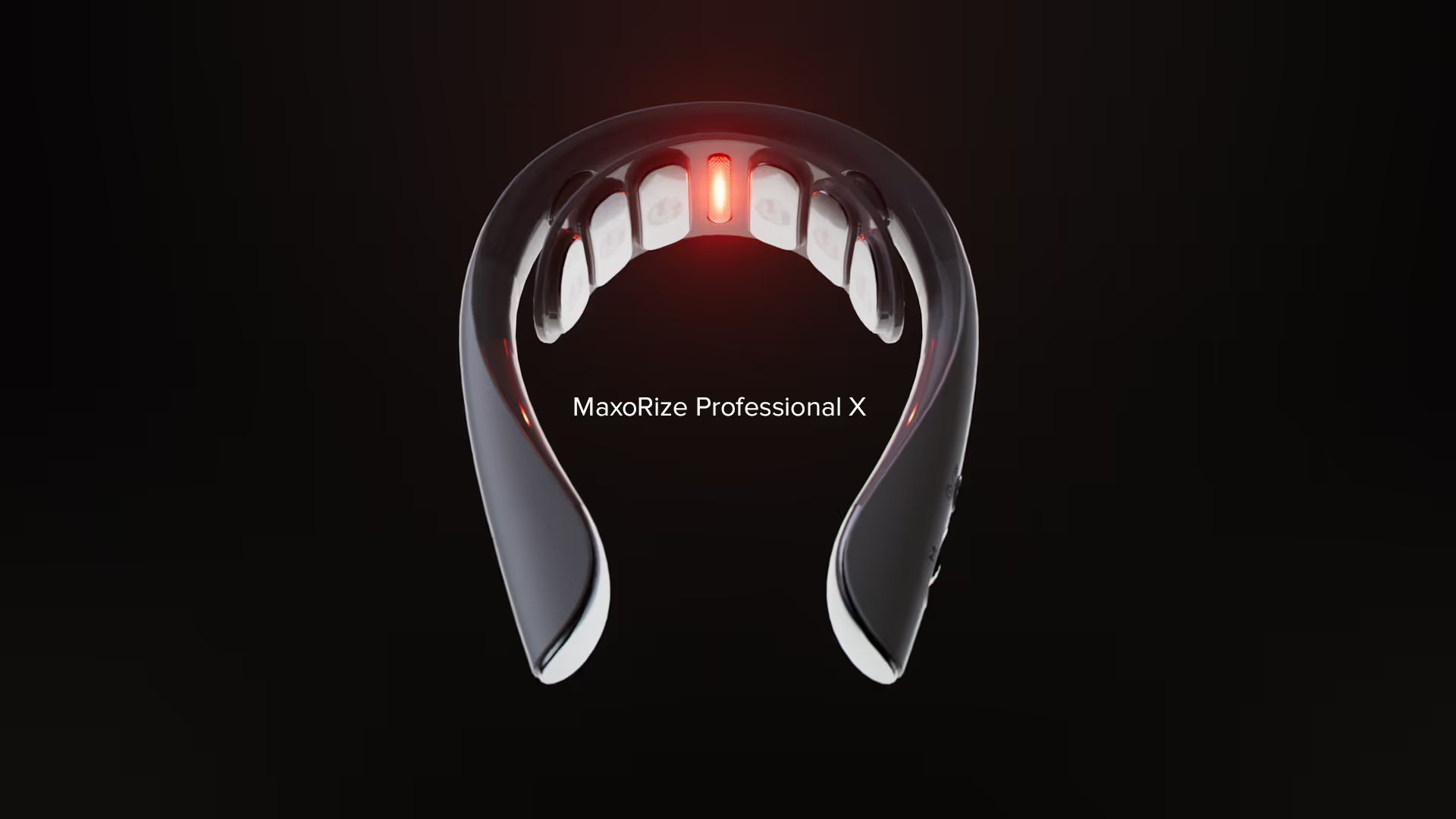
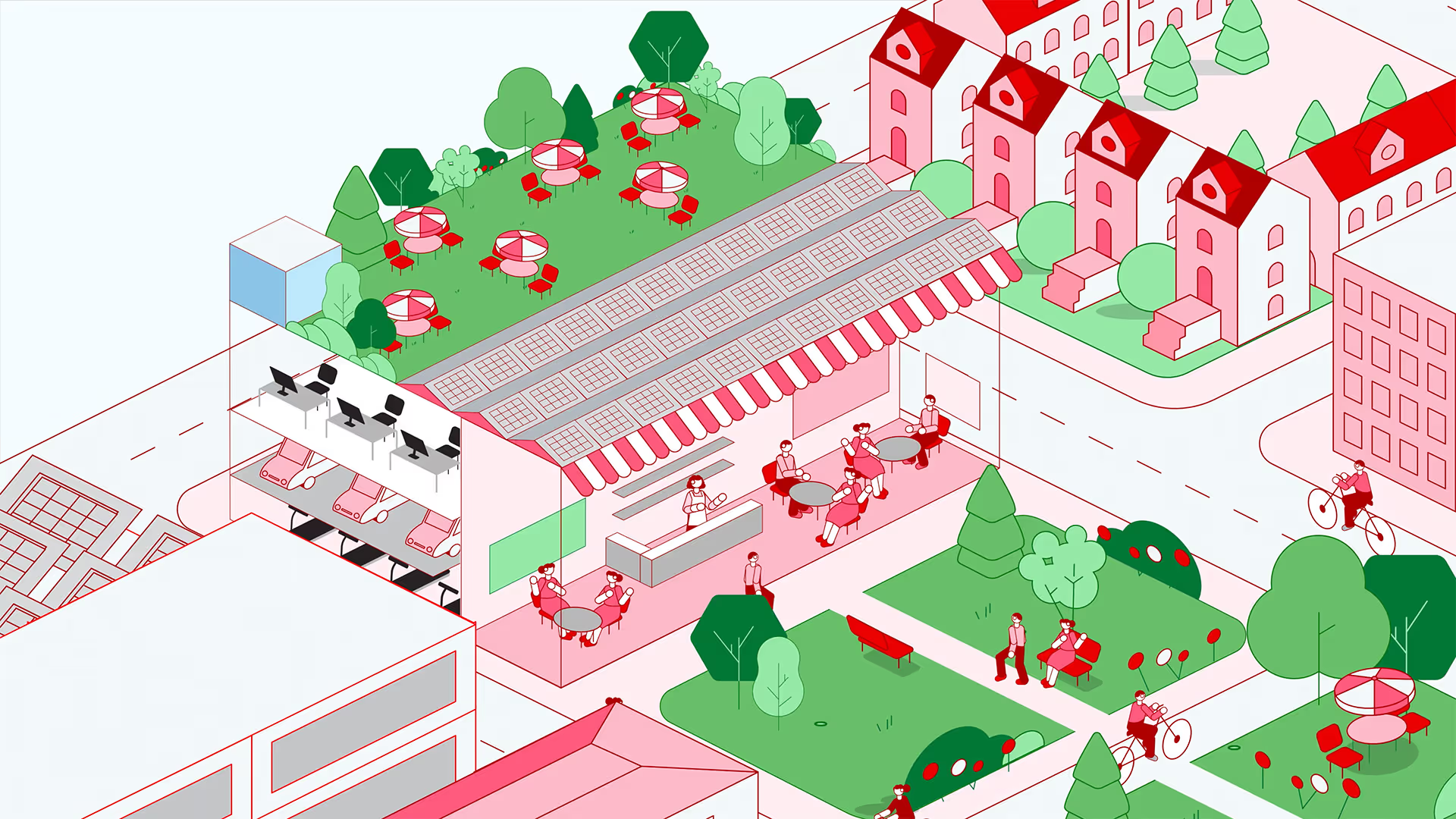
Een selectie uit de animaties die we voor onze klanten maakten. Van korte uitlegvideo tot technische 3D-animatie: elk project begint bij de vraag wat de kijker moet begrijpen.
E-learning animations are highly versatile as long as the goal is to convey information clearly, consistently, and engagingly. In practice, they are often used in internal learning environments, onboarding processes, and digital training programs.
Animation is particularly valuable when it comes to recurring learning objectives. You invest once in a clear explanation, which you can then use on a large scale and update relatively easily later on. Check out the case study: educational animations (Vekabest) for a concrete example.
When you commission an e-learning animation, you don’t just want a visually appealing video—you want a learning solution that actually works. That’s why the process starts with the content. We assess your target audience, their prior knowledge, learning objectives, and the context in which the animation will be used. Based on this, we translate the content into a script and storyboard that builds logically, holds the viewer’s attention, and delivers information in manageable doses.
Next, we develop the visual style and production. This can be done in 2D, 3D, or a combination of both, depending on the subject matter. Throughout the process, we take into account how the content will be used—whether on mobile devices, within a learning management system (LMS), or as part of a broader training program. We also incorporate elements such as voice-overs, subtitles, sound design, and multilingual versions.
A typical procedure consists of the following steps:
When you commission an e-learning animation, you’re choosing a format that makes content easy to understand, engaging, and versatile. Whether you’re working on onboarding, process explanations, safety training, or microlearning, custom 2D or 3D animations help you translate knowledge into a format that people actually engage with and remember. For training on systems and tools, a software tutorial animation can also be a logical addition. By taking learning objectives, the target audience, the LMS, mobile use, and multilingual support into account from the start, you’ll get more out of every training session.
"Great interaction to come up with a great script and a much viewed animation. Great."

Always thinking along with us, delivering on time, and always providing quality. Would 100% recommend!

"Super work they did! They move quickly, understand what you want and deliver great work."

Animation Agency knows how to turn complex issues into understandable and above all spectacular animations. Where other animation agencies dropped out they knew how to go the extra mile."

"Professional and driven club! Open to creativity and quick to act."

"Based on a compact briefing, they created several beautiful animations. They also thought along very well to get it perfect in the website, exactly as we wanted it. Highly recommended!"

"Animation Agency is een geweldige partner om in je netwerk te hebben. Ze denken mee met onze wensen en de lijnen zijn kort, waardoor ze een plezier zijn om mee te werken."

"With enormous passion for the profession ánd animation as an expertise Animation Agency makes very cool videos! Skilled, reliable and motivated. It works!"

"Snel en vakkundig! Meedenkend en vakkundig team met snelle (goede) resultaten!"

"The service is excellent! They are well thought of and always think in terms of possibilities."

"We worked with Animation Agency to put on a very cool production. It was nice to switch gears and a smooth process. Definitely worth repeating!"

"Great work done by Animation Agency"

Vertrouwd door 800+ organisaties



The choice between 2D and 3D depends on what you want to explain. Both styles can be highly effective for teaching, as long as the format suits the content.
2D is often ideal for processes, concepts, onboarding, and abstract topics. It’s easy on the eyes, can be stylishly designed to match your brand identity, and works well when you want to convey information concisely and clearly. 2D is also often an efficient choice for microlearning.
3D is useful when spatial awareness is important. Think of machines, technical systems, products, logistics processes, or situations where you want to show something from multiple angles. This makes complex operations much easier to understand visually.
| Keuze | Geschikt voor | Voordeel |
|---|---|---|
| 2D animation | Onboarding, processen, software, instructies | Snel, helder en goed schaalbaar |
| 3D animation | Techniek, producten, installaties, fysieke handelingen | Veel detail en ruimtelijk inzicht |
| Combinatie 2D/3D | Complexe leertrajecten met verschillende type content | Flexibel en didactisch sterk in te zetten |
An animation is only truly valuable if the information is effectively conveyed. That’s why a strong e-learning animation isn’t just about design—it’s about clear learning logic. In practice, this means: a clear storyline, a logical structure, visual aids for difficult concepts, and a pace that suits the target audience.
Key pedagogical decisions include:
This approach is particularly effective in microlearning animations. By breaking down knowledge into short modules of 60 to 120 seconds, the cognitive load remains lower and the content is easier to follow on a mobile device or while at work.
When you commission an e-learning animation, the content must also be practical and usable. That’s why it’s important for the animation to function properly within your learning environment. Animation Agency animations in formats suitable for use within LMS environments and on mobile devices, so that employees or learners can easily access the content whenever and wherever they need it.
Examples of technical acceptance include:
If you’d like to learn more about combining animations with learning platforms, this guide to animations for e-learning and LMS provides additional context.
Comprehensibility plays a major role in e-learning. That is why voice-overs and subtitles are often included as standard in the production process. A professional voice-over helps convey information calmly and clearly, while subtitles ensure greater accessibility and usability in the workplace, on the go, or in environments where audio isn’t always an option.
If you work with international teams or multiple target audiences, it’s a good idea to plan for translations and language variations from the start. This allows you to develop a single base animation and efficiently roll it out in multiple languages while maintaining the same style and structure.
The cost depends on the scope, style, and complexity of the project. Based on the available information, an indicative price typically ranges from €3,500 to €15,000. Simple, short modules usually fall toward the lower end of that range, while custom work involving 3D, multiple versions, or additional production steps tends to be more expensive.
Key pricing factors include:
| Situatie | Indicatie |
|---|---|
| Korte 2D microlearning animatie | Vanaf circa €3.500 |
| Uitgebreidere maatwerk e-learning animatie | Middensegment binnen de range |
| Complexe 3D of meertalige productie | Tot circa €15.000 of hoger afhankelijk van scope |
Questions such as "How much does it cost to create an e-learning course?", "How much does 20 minutes of animation cost?", or "What does it cost to have animation created?" cannot be answered with a single fixed price. The final price always depends on the content, style, length, and intended use.
The average turnaround time for an e-learning animation is often between 3 and 6 weeks. This depends on the complexity of the content, the chosen style, and how quickly feedback can be incorporated. A short microlearning animation can often be produced more quickly than a larger series of modules or a technical 3D project.
A clear briefing speeds up the process. If the learning objectives, target audience, source material, and internal stakeholders are clearly defined in advance, you can move more quickly on to the script, storyboard, and production.
Do you have multiple topics, departments, or target audiences? If so, it’s often better to create a series of short modules rather than a single long training course. This makes the content more organized, easier to reuse, and simpler to update. Plus, it aligns well with how people learn online: in short, task-oriented sessions, exactly when the information is needed.
A series of e-learning animations is particularly useful for:

Dat hangt af van de vorm. Een losse e-learning animatie kost minder dan een compleet leertraject met meerdere modules, verschillende talen en uitgebreide interactie. Voor maatwerk animatieprojecten kun je vaak rekenen op een indicatie tussen €3.500 en €15.000, afhankelijk van de scope.
Twintig minuten animatie is in de praktijk een groot project. Meestal wordt zulke content opgesplitst in meerdere korte modules, omdat dat didactisch sterker werkt en beter past bij e-learning. De prijs is afhankelijk van stijl, script, aantal scènes, revisies en eventuele vertalingen.
De kosten worden vooral bepaald door lengte, moeilijkheid, vormgeving en productiewerk. Een korte 2D instructie-animatie is relatief efficiënt te produceren, terwijl technisch 3D maatwerk meer tijd vraagt. Daarom wordt meestal gewerkt met een offerte op basis van inhoud en doelstelling.
AI kan onderdelen van het productieproces versnellen, maar voor een effectieve e-learning animatie blijven didactiek, script, stijlkeuzes en kwaliteitscontrole doorslaggevend. Zeker als je training moet aansluiten op leerdoelen, huisstijl en professionele standaarden, blijft menselijke regie essentieel. In sommige gevallen kan een AI e-learning animatie wel een interessante aanvulling zijn binnen het productieproces.
Ja, onboarding is juist een van de sterkste toepassingen. Je kunt nieuwe medewerkers snel en consistent meenemen in processen, systemen, veiligheid, cultuur of werkwijzen, zonder afhankelijk te zijn van een live uitleg op elk moment.
Ja, dat is goed mogelijk. Je kunt werken met vertaalde ondertiteling, meerdere voice-overs of verschillende taalversies van dezelfde basisanimatie. Dat is efficiënt als je teams in meerdere landen wilt trainen.