Do you want to clearly explain a product, process, or procedure without lengthy manuals or complicated training sessions? With a 2D instructional animation, you can quickly show exactly what someone needs to know, do, or remember. Animation Agency custom 2D instructional animations for companies and organizations that want to convey complex information in a way that is easy to understand, visually compelling, and immediately applicable.
Whether it’s a product instruction animation, safety instruction animation, onboarding video, work instructions, or an educational explanation: a good 2D instructional animation combines a clear structure, strong visuals, and a logical flow. This not only makes the information easier to understand, but also easier to remember and more versatile for use on websites, intranets, e-learning platforms, and social media channels.


A 2D instructional animation is ideal when you want to explain something step by step. Think of a machine that needs to be used safely, software with a fixed workflow, or a service where the user first needs to understand how it works. Instead of using a lot of text or separate visuals, you bring everything together into a single, clear narrative.
Animation is particularly effective when dealing with technical, abstract, or procedural topics. You can zoom in on specific elements, simplify situations, and highlight exactly what’s relevant—for example, in a technical instructional animation. As a result, 2D animation is often a smart choice for organizations in technology, healthcare, education, manufacturing, and business services.
Een selectie uit de animaties die we voor onze klanten maakten. Van korte uitlegvideo tot technische 3D-animatie: elk project begint bij de vraag wat de kijker moet begrijpen.
Having a 2D instructional animation created offers a wide range of applications. This format is flexible enough to make both practical actions and abstract procedures easy to understand. You can literally show what someone needs to do, but also explain why a step is important or what goes wrong if a procedure isn’t followed.
Show users how a product works, how to install it, or how to use it safely. This reduces the likelihood of errors and often eases the burden on support and customer service.
Clarity is essential for safety training. Animation allows you to clearly explain risks, prohibited actions, emergency procedures, and personal protective equipment without relying on complex on-site footage.
When it comes to onboarding or explaining processes, animation helps convey internal procedures consistently. This includes quality procedures, logistical steps, compliance guidelines, and operational workflows.
In education and training, animation is effective for visualizing abstract or new material. This makes learning more accessible, especially when information is presented in stages.
Not every message calls for the same format. A 2D instructional animation is particularly well-suited when clarity is the main priority. You want the viewer to understand how something works, what steps are required, or what the correct procedure is. In that case, it’s less about spectacle and more about clarity, structure, and ease of use.
This makes this type of animation suitable for a wide range of applications:
Are you working on UX, SaaS, or process documentation? Then a software tutorial animation is the perfect solution.
Do you need to convey information quickly, consistently, and at scale? If so, 2D is often more effective than a static PDF or traditional manual.
A strong instructional animation is more than just a series of moving images. The content must be pedagogically sound. This means that the message is structured logically, that the viewer isn’t overwhelmed with information, and that every scene contributes to understanding. That’s why a good animation doesn’t start with design, but with the question: what should the viewer know, feel, or do by the end?
In an effective 2D instructional animation, these elements play a major role:
Precisely because instructional content needs to be functional, customization is important. An animation for operators requires a different tone and structure than one for end users or students.
A great end result starts with a well-defined process. Especially when it comes to instructional content, every element must be just right: content, sequence, visual choices, audio, and delivery. That’s why Animation Agency a clear production approach Animation Agency which strategy, script, design, and animation all work together seamlessly.
"Great interaction to come up with a great script and a much viewed animation. Great."

Always thinking along with us, delivering on time, and always providing quality. Would 100% recommend!

"Super work they did! They move quickly, understand what you want and deliver great work."

Animation Agency knows how to turn complex issues into understandable and above all spectacular animations. Where other animation agencies dropped out they knew how to go the extra mile."

"Professional and driven club! Open to creativity and quick to act."

"Based on a compact briefing, they created several beautiful animations. They also thought along very well to get it perfect in the website, exactly as we wanted it. Highly recommended!"

"Animation Agency is een geweldige partner om in je netwerk te hebben. Ze denken mee met onze wensen en de lijnen zijn kort, waardoor ze een plezier zijn om mee te werken."

"With enormous passion for the profession ánd animation as an expertise Animation Agency makes very cool videos! Skilled, reliable and motivated. It works!"

"Snel en vakkundig! Meedenkend en vakkundig team met snelle (goede) resultaten!"

"The service is excellent! They are well thought of and always think in terms of possibilities."

"We worked with Animation Agency to put on a very cool production. It was nice to switch gears and a smooth process. Definitely worth repeating!"

"Great work done by Animation Agency"

Vertrouwd door 800+ organisaties



Animation Agency custom 2D instructional animations for organizations that want to convey complex information clearly. It’s not just about beautiful visuals, but about a seamless process—from script development to sound design and delivery. Personal guidance plays a key role in this process, ensuring that content, style, and scheduling are well-aligned.
Our approach is ideal for companies and organizations that want to use instructional content for product explanations, safety communications, onboarding, and educational purposes. We work with you to determine the structure, visuals, target audience, and distribution, ensuring that the animation not only looks great but also works effectively in practice.
When it comes to instructional content, 2D is often the most practical choice. The style is clear, easy to read, and well-suited for simplifying processes. You don’t need to depict everything in a photorealistic way to be clear. In many cases, a simplified visual style actually helps convey the key message more effectively.
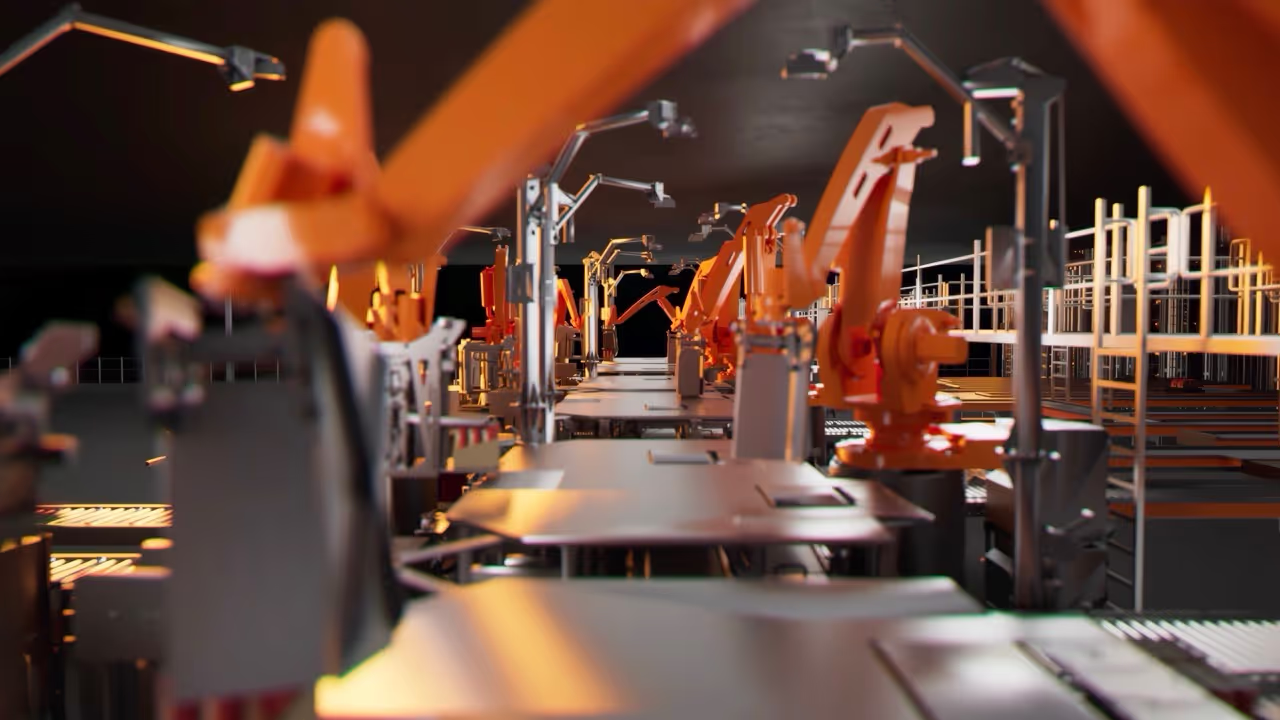
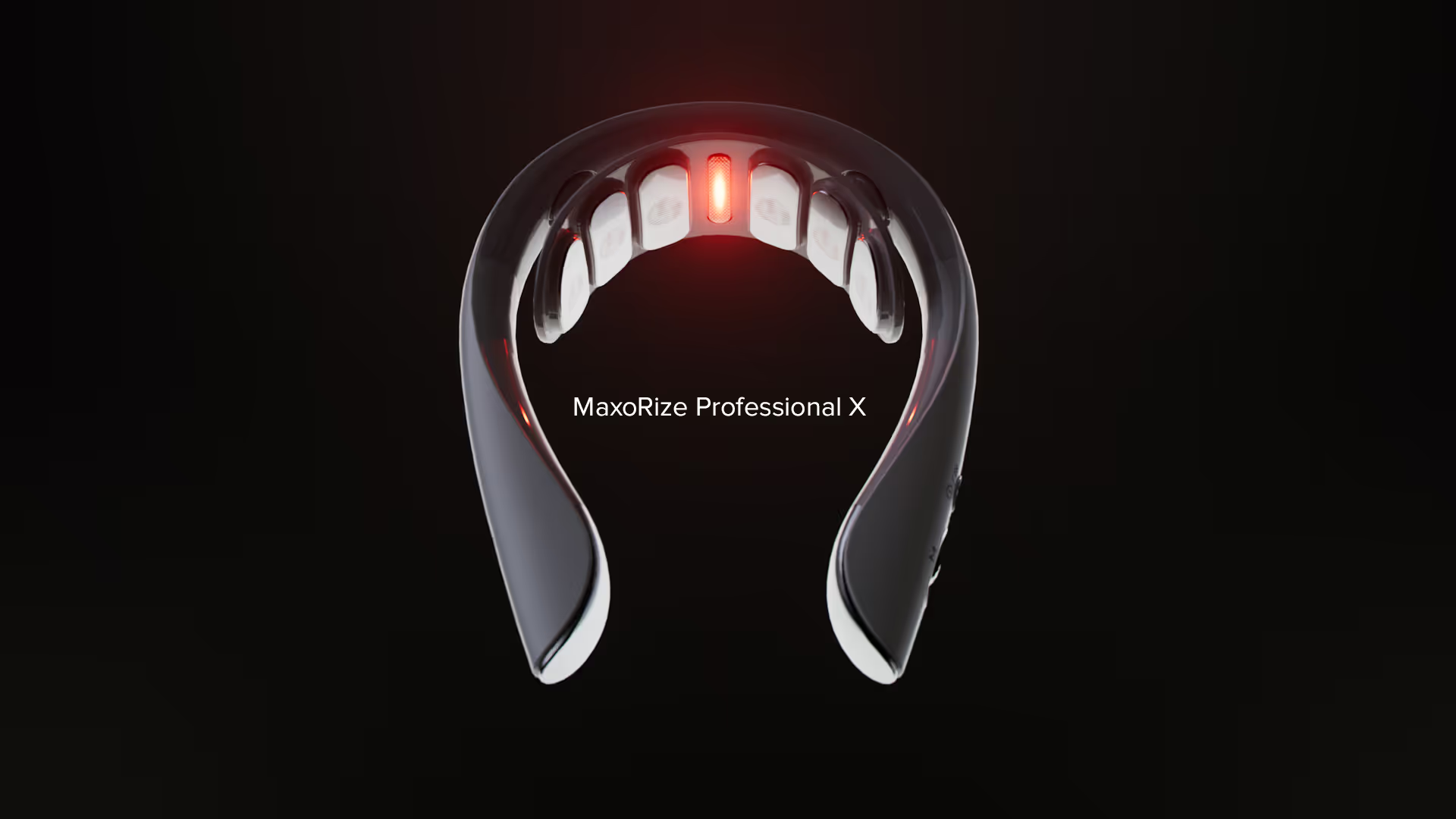
3D animation can be useful when the focus is on spatial relationships, technical aspects, or product details—for example, when depicting a complex machine, a technical cross-section, or a product visualization. However, if the primary goal is to explain something clearly and make it easy to understand, 2D animation is usually faster and more efficient.
| Type | Past bij | Voordeel |
|---|---|---|
| 2D instructie animatie | procesuitleg, onboarding, safety, software, e-learning | helder, flexibel en efficiënt |
| 3D animation | technische producten, ruimtelijke situaties, complexe productdetails | meer diepte en realisme |
| Hybride aanpak | wanneer uitleg en technische visualisatie samenkomen | combinatie van duidelijkheid en detail |
An instructional animation shouldn’t just look good—it needs to be effective. That’s why it’s important to clearly define the content, context, and objectives from the start. The clearer the briefing, the better the animation will align with real-world applications.
Creating a good 2D instructional animation isn’t just about production—it’s also about smart structuring. That’s exactly where content and creativity come together.
The turnaround time depends on the length, complexity, and amount of coordination required. A concise 2D instructional animation with a clear briefing can be produced relatively quickly. If multiple target audiences, languages, technical content, or additional versions are required, the turnaround time will increase.
In practice, these factors play the biggest role:
Do you have a fixed deadline, such as for a training session, launch, or internal rollout? If so, it’s a good idea to mention this right away during the intake so that the planning and scope can be adjusted accordingly.
The cost of a 2D instructional animation depends on the desired end result. There is no standard price that applies to every project, as the content, style, and scope can vary greatly. A short, simple explanatory video requires a different approach than a series of safety instructions or a multilingual training animation.
Key pricing factors include:
Would you like to know what’s best for your specific situation? In that case, a tailored consultation is often more valuable than a generic price estimate. This way, you’ll receive a proposal that aligns with your goals, target audience, deadline, and distribution strategy.
 Vergelijkbaar project?Bespreek het met Thibault