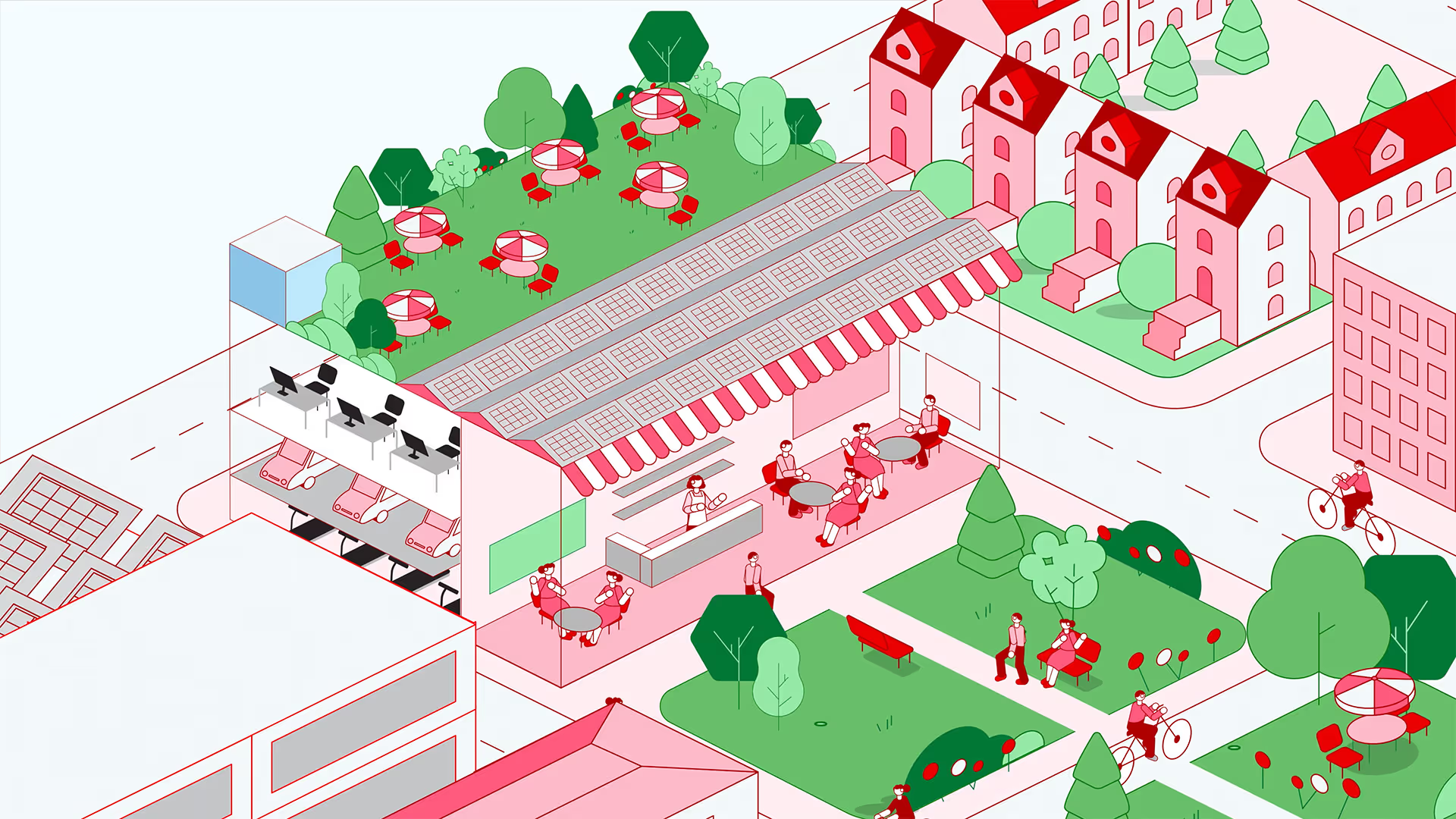
Do you want to simplify complex explanations into clear, visual instructions? With a 3D instructional animation, you can demonstrate processes, products, and procedures step by step—without distractions, without confusing jargon, and without the limitations of live-action footage. Animation Agency custom 3D instructional animations for companies that want to clearly explain assembly, maintenance, software workflows, or safety procedures.


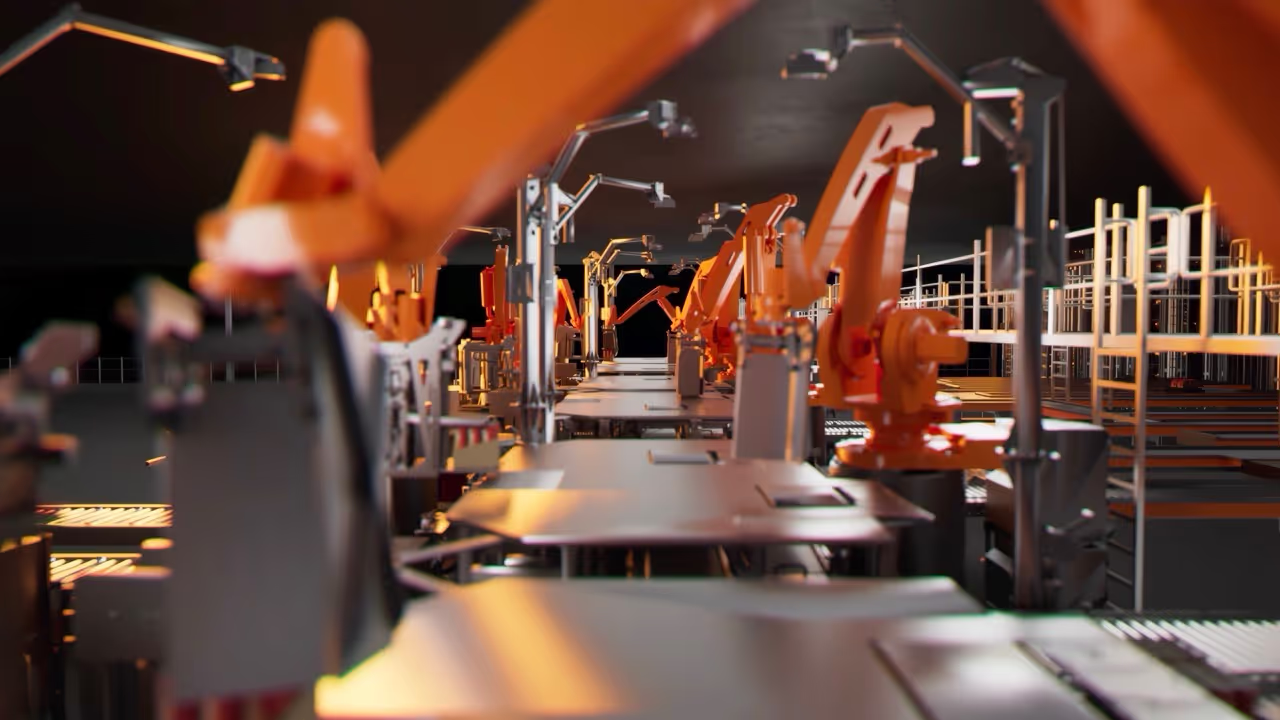
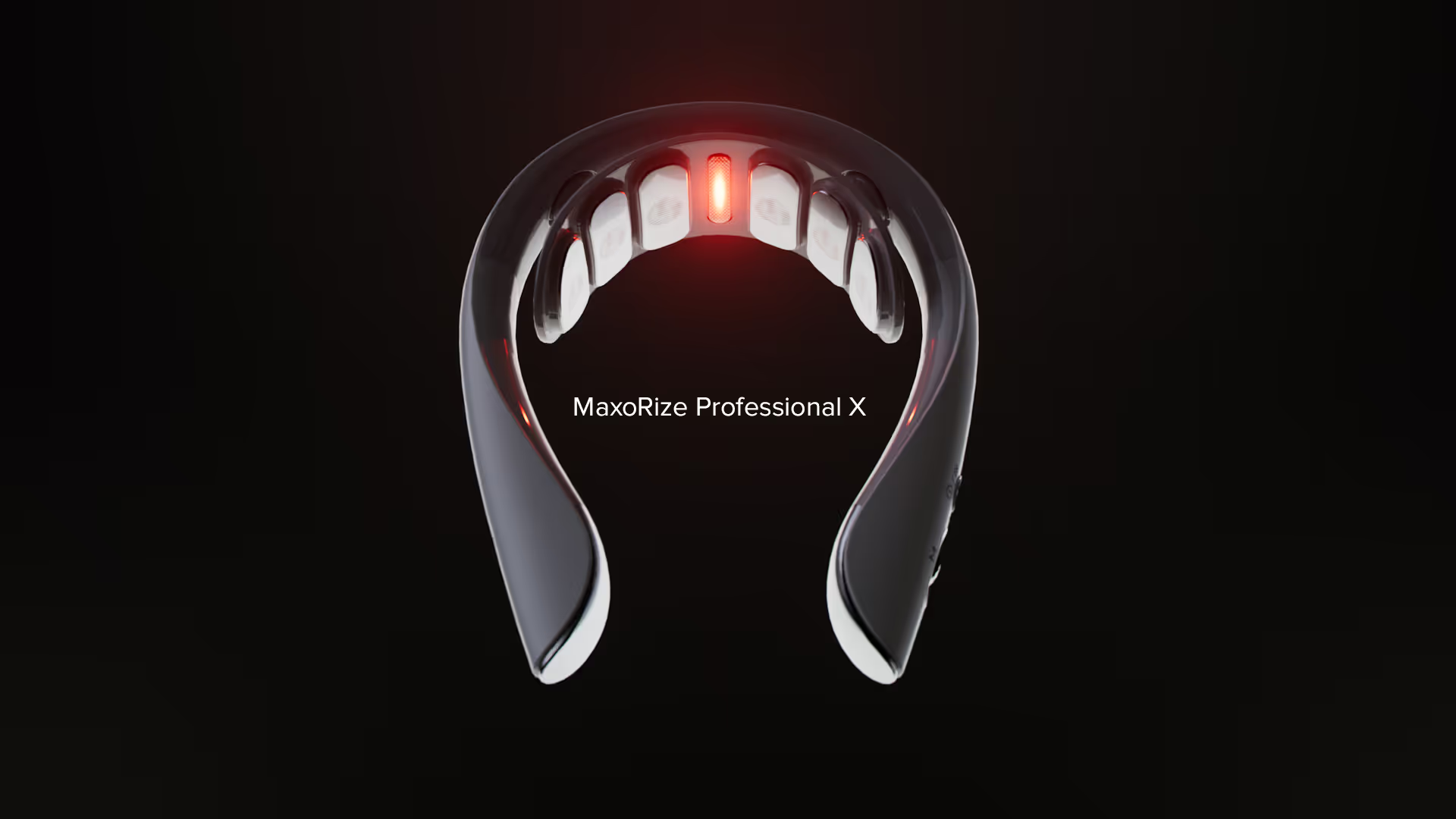
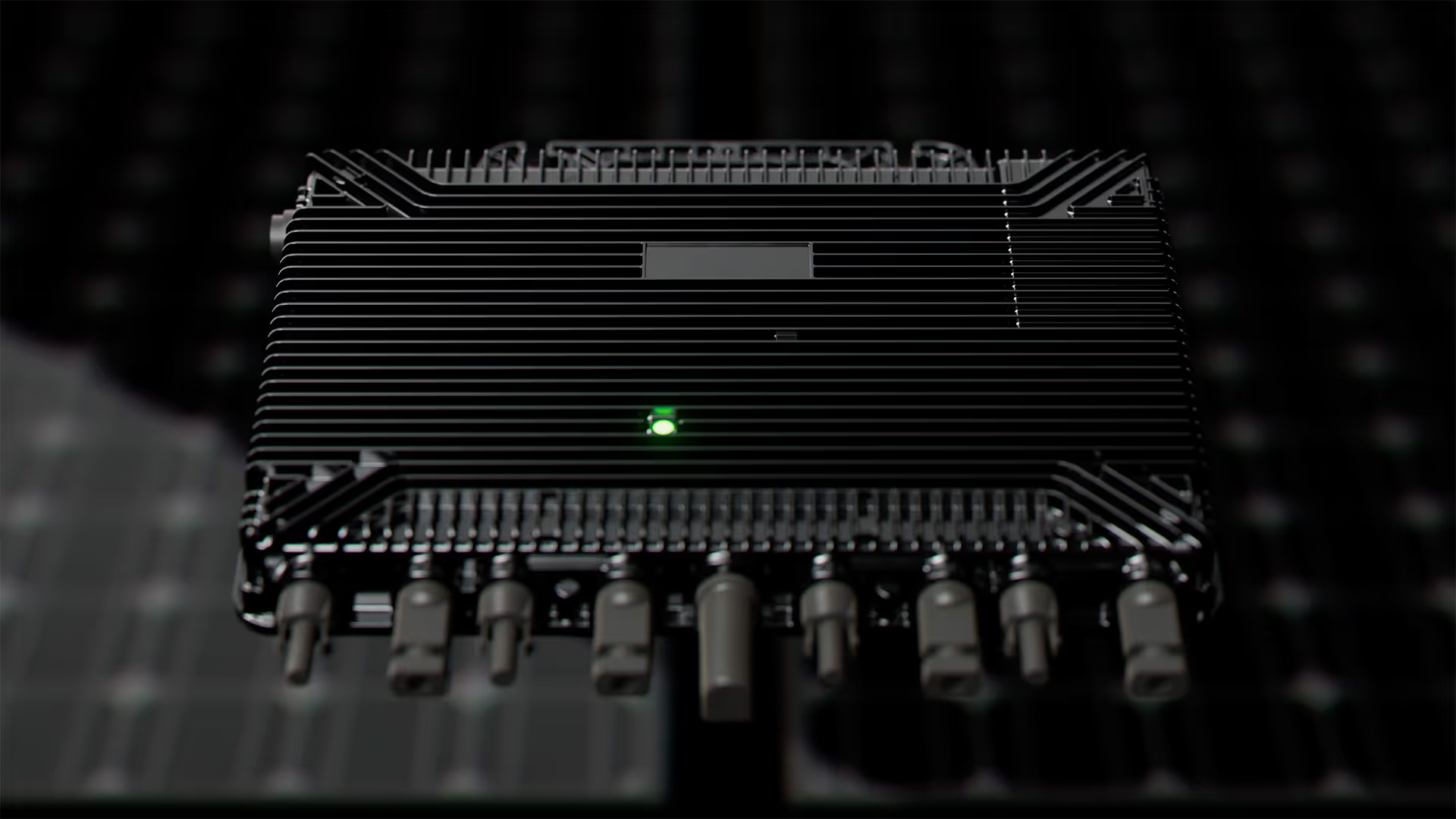
A 3D instructional animation is ideal when you need to explain something that is difficult to visualize in practice, technically complex, or prone to errors. Think of a machine’s inner workings, an assembly sequence involving multiple parts, or a procedure where safety is paramount. Instead of lengthy manuals or static visuals, you can show exactly what happens, in the correct order and from the best viewing angle.
This makes 3D animation particularly effective for companies that want to convey information not only visually appealing but, above all, clearly. You can highlight specific elements, zoom in on details, show cross-sections, and repeat actions without having to reshoot footage. The result is an instructional video that is easier to understand and more easily scalable for training, onboarding, support, or customer communication.
Een selectie uit de animaties die we voor onze klanten maakten. Van korte uitlegvideo tot technische 3D-animatie: elk project begint bij de vraag wat de kijker moet begrijpen.
Animation Agency 3D instructional animations for a wide range of applications. The goal is always the same: to break down a complex message into a logical, visual explanation that people can quickly understand and better remember.
For products or systems with multiple components, 3D visualization makes the correct assembly sequence crystal clear. It shows which components go where, how they move, and where the critical points are. This prevents errors during installation and reduces the burden on support or field service teams.
Clarity is essential when it comes to maintenance instructions. With 3D animation, you can demonstrate procedures step by step, including warnings, tools, and the correct sequence. Especially in technical settings, this is often more effective than text-based manuals or standalone images. In such situations, a technical instructional animation can also be a relevant solution.
Safety requires clear communication that leaves no room for interpretation. With a 3D instructional animation, you can clearly visualize risk zones, proper procedures, and prohibited actions. This makes this format ideal for onboarding, compliance training, and workplace instructions.
It’s not just physical products that lend themselves to 3D. Software workflows, logistics processes, and data-driven applications can also be visually represented in a clear and concise software tutorial animation. This helps make abstract steps concrete and ensures the explanation remains accessible to users with varying levels of knowledge.
Not every instructional video needs to be created in 3D. However, when realism, technical accuracy, or internal mechanics are important, 3D offers clear advantages over 2D or live-action. For example, you might choose to have a 3D instructional animation created if a product isn’t yet physically available, if filming on location is impractical, or if you want to show a process from the inside.
3D is often an efficient choice for international rollouts as well. The base animation remains the same, while you can easily adapt the voice-over, subtitles, or on-screen text for each language or target audience. This allows you to invest in training content that remains useful for longer and can be used across multiple channels.
| Situatie | Waarom 3D geschikt is |
|---|---|
| Montage-instructies | Je laat exact zien welke onderdelen, volgorde en bewegingen nodig zijn |
| Onderhoud en service | Je maakt onderhoudsstappen veilig, herhaalbaar en visueel duidelijk |
| Veiligheidsprocedures | Je simuleert situaties zonder risico en benadrukt kritieke handelingen |
| Softwareflows of systemen | Je visualiseert abstracte processen in een begrijpelijke verhaallijn |
| Complexe machines of techniek | Je toont interne werking, doorsneden en detailniveaus die film niet biedt |
A successful outcome starts with a clear process. That’s why Animation Agency a structured approach Animation Agency which the content, schedule, and feedback points are clearly defined from the outset. This allows you to stay in control of the process and know exactly what’s needed at each stage.
We start by defining the animation’s objective. What should the viewer know, understand, or do after watching it? To do this, we consider the target audience, distribution channel, content complexity, and any existing documentation such as manuals, CAD files, screenshots, or product specifications. In this phase, we also identify risks, must-haves, and prerequisites.
We then translate the content into a logical script. Not as a dry list, but as a clear sequence of instructions where each step builds on the previous one. This ensures that the explanation remains concise without losing any important information. In a 3D instructional animation, the script revolves around clarity, sequence, and understandable language. If you want to refine your preparation, read our briefing and script for instructional animation.
In the storyboard, we break down what the viewer sees scene by scene. This includes camera angles, close-ups, labels, call-outs, and transitions. This is an important checkpoint, because it allows you to see whether the direction makes sense before production begins in earnest.
Wanneer er bestaande 3D- of CAD-data beschikbaar is, kunnen we die waar mogelijk gebruiken als basis. Is die er niet, dan bouwen we relevante onderdelen op maat op. In deze fase letten we op technische correctheid, visuele helderheid en de juiste balans tussen detail en overzicht. Zeker bij technische producten is dat essentieel: te weinig detail maakt de uitleg vaag, te veel detail maakt de instructie onnodig druk.
Next, we bring the instructions to life. Movement, timing, and camera work must not only be visually appealing, but above all, functional. Every shot supports the explanation. If desired, we add voice-overs, subtitles, sound effects, and music to convey the information even more effectively.
Throughout the process, there are scheduled review sessions so you can make adjustments to the content and details. After the final round of revisions, we deliver the animation in the agreed-upon format. These are often versions intended for websites, presentations, training, social media, or internal use.
An effective instructional animation is more than just a series of attractive shots. Its power lies in the combination of logical content and visual precision. The viewer must be able to understand what they are seeing, why it is important, and what the correct action or sequence is—without needing any additional explanation.
That is why we focus on a number of key quality factors in every project:
When commissioning a 3D instructional animation, pedagogy is just as important as design. The animation should not only be visually impressive, but above all help reduce errors, questions, and confusion.
Animation Agency custom animations for companies that want to convey complex information clearly. We combine substantive expertise with a transparent production process. We guide you every step of the way, from the initial briefing to final delivery, including script development, storyboarding, voice-over casting, and sound design when needed.
Our approach is practical: we work with you to determine what you really need to showcase, which format best suits your target audience, and how to use the animation in training, support, internal communications, or marketing. Because we incorporate regular feedback sessions, you maintain control over the content, schedule, and quality.
Do you have a technical case, assembly instructions, maintenance procedure, or software workflow that needs to be clearly explained? If so, a 3D instructional animation is often the quickest way to ensure better understanding and fewer misunderstandings. If you’d like to get some inspiration first, read more about product instructional animations for installation, use, and demonstration.
"Great interaction to come up with a great script and a much viewed animation. Great."

Always thinking along with us, delivering on time, and always providing quality. Would 100% recommend!

"Super work they did! They move quickly, understand what you want and deliver great work."

Animation Agency knows how to turn complex issues into understandable and above all spectacular animations. Where other animation agencies dropped out they knew how to go the extra mile."

"Professional and driven club! Open to creativity and quick to act."

"Based on a compact briefing, they created several beautiful animations. They also thought along very well to get it perfect in the website, exactly as we wanted it. Highly recommended!"

"Animation Agency is een geweldige partner om in je netwerk te hebben. Ze denken mee met onze wensen en de lijnen zijn kort, waardoor ze een plezier zijn om mee te werken."

"With enormous passion for the profession ánd animation as an expertise Animation Agency makes very cool videos! Skilled, reliable and motivated. It works!"

"Snel en vakkundig! Meedenkend en vakkundig team met snelle (goede) resultaten!"

"The service is excellent! They are well thought of and always think in terms of possibilities."

"We worked with Animation Agency to put on a very cool production. It was nice to switch gears and a smooth process. Definitely worth repeating!"

"Great work done by Animation Agency"

Vertrouwd door 800+ organisaties



3D instructional animations are particularly valuable for organizations that need to convey complex information in an understandable way to employees, customers, technicians, partners, or end users. This includes companies in high-tech, healthcare, finance, retail, and other sectors where processes or products are not self-explanatory.
For technical organizations, a 3D instructional animation can help explain how machines work, as well as assembly or maintenance procedures. In the healthcare sector, this may involve procedures, systems, or medical-technical explanations. In retail or software environments, 3D animations can provide support for onboarding, processes, or internal instructions. The format varies by industry, but the need is the same: to break down complex information into something that is immediately understandable.
The cost of a 3D instructional animation is determined on a case-by-case basis. The price depends on the complexity of the content, the number of scenes, the desired level of detail, and the source materials available. Factors such as voice-overs, multiple languages, subtitles, or different delivery formats also affect the scope of the project. For more information, see Instructional Animation Costs.
In practice, we look at the following, among other things:
Omdat geen twee producties hetzelfde zijn, maken we offertes op basis van inhoud en doel. Zo krijg je geen generiek pakket, maar een voorstel dat past bij wat je echt nodig hebt.
The turnaround time depends on the complexity of the project and the amount of input already available. A concise video with clear instructions and existing assets can be produced relatively quickly. A technical animation with a high level of detail, multiple rounds of feedback, or different language versions will take more time.
Key factors to consider when planning are:
By making clear decisions in advance about content, objectives, and scheduling, the process remains manageable and predictable.

3D is vooral geschikt als diepte, realisme of technische nauwkeurigheid belangrijk zijn. Wil je interne werking, montagevolgordes of complexe objecten overtuigend laten zien, dan biedt 3D meer mogelijkheden dan 2D. Voor eenvoudigere uitleg kan 2D soms voldoende zijn. Twijfel je tussen 2D en 3D? Lees 2D of 3D voor jouw instructie-animatie?
Ja, in veel gevallen kunnen bestaande CAD- of 3D-bestanden gebruikt worden als basis voor de animatie. Die bestanden worden dan geoptimaliseerd voor animatie, zodat ze technisch bruikbaar zijn en visueel goed uitkomen in de uiteindelijke productie.
Ja, dat is juist een sterk voordeel. De visuele basis blijft gelijk, terwijl voice-over, ondertiteling en on-screen tekst per taal aangepast kunnen worden. Dat maakt 3D instructie animaties efficiënt voor internationale teams en markten.
Denk aan handleidingen, productspecificaties, screenshots, procesbeschrijvingen, CAD-data, huisstijlelementen en informatie over doelgroep en doel. Hoe duidelijker de input, hoe sneller we de juiste instructiestructuur kunnen uitwerken.
Ja. Juist wanneer een product nog in ontwikkeling is of lastig te filmen is, biedt 3D uitkomst. Op basis van tekeningen, referenties, documentatie of bestaande modellen kan de animatie al ontwikkeld worden voordat het product fysiek beschikbaar is.
Een 3D instructie animatie kan worden ingezet op je website, in presentaties, e-learning, supportomgevingen, interne trainingen, onboarding en social media. Indien nodig leveren we verschillende versies aan per kanaal of formaat.